

By 2026, generative AI has moved from a novel concept to an essential tool in game development, with 85.8% of developers now using it. This guide explores how AI is revolutionizing workflows, boosting efficiency by up to 30%, and acting as a 'creative co-developer' for assets, code, and personalized player experiences, all while being balanced by crucial human oversight.
The conversation around artificial intelligence in game development has fundamentally shifted. What was once a topic of future speculation is now a daily reality. As of 2026, generative AI is no longer a fringe technology but a core component of the modern development toolkit, transforming workflows, enhancing creativity, and dramatically improving efficiency. A landmark September 2026 report from Japan's Computer Entertainment Supplier's Association (CESA) confirms this seismic shift, revealing that a staggering 85.8% of Japanese game developers now actively use generative AI in their work—a sharp rise from just 51% in 2025. This guide delves into the practical applications of this technology and how it's reshaping the industry from the ground up.
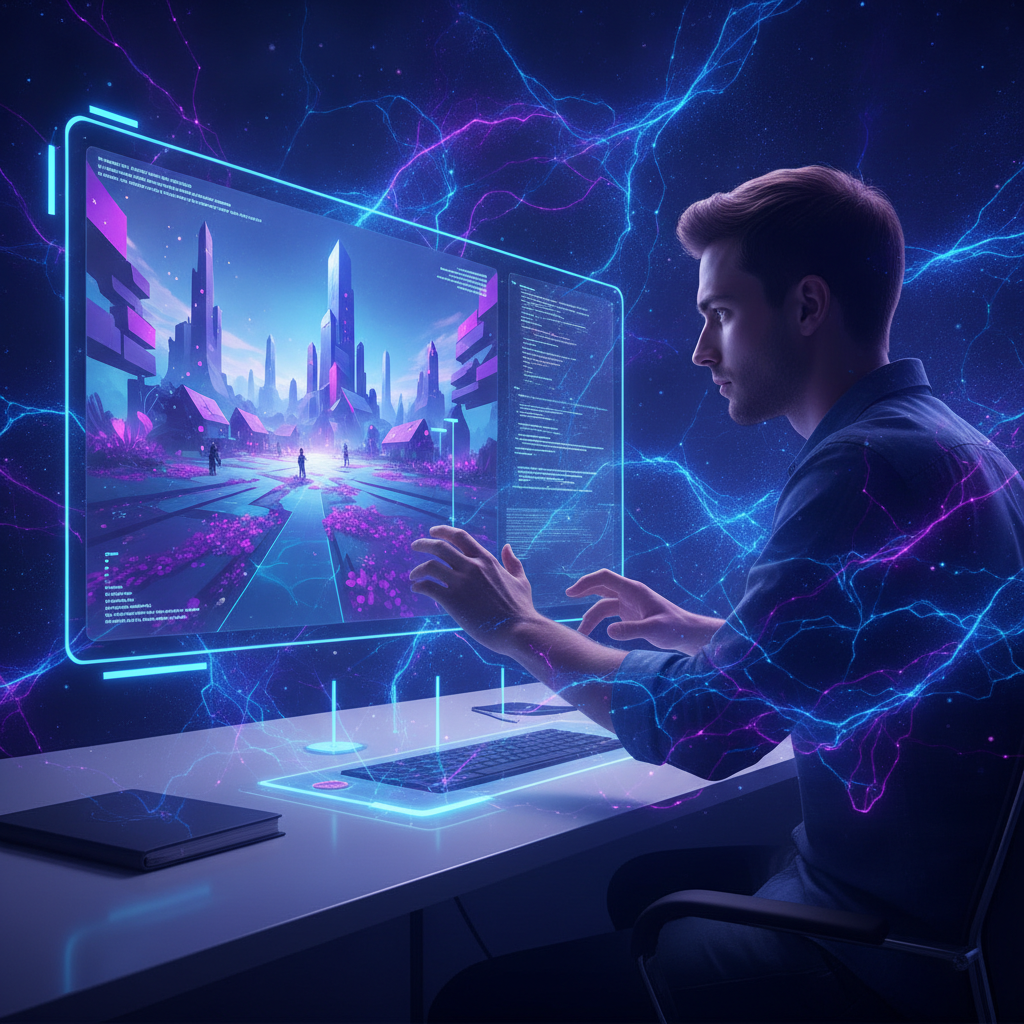
Generative AI in game development refers to the use of artificial intelligence algorithms to create original content, rather than simply analyzing or processing existing data. It functions as a powerful 'creative co-developer,' capable of generating a vast array of game assets including new 3D models, unique textures, dynamic environments, responsive character dialogue, and even foundational code for gameplay mechanics. Unlike traditional tools, it actively participates in the creative process, offering developers a nearly infinite source of inspiration and foundational work to build upon.
The rapid integration of generative AI isn't driven by novelty; it's fueled by tangible results. The same CESA report highlights that the top anticipated benefits among developers are “improved operational efficiency and productivity” and “shorter development cycles.” These aren't minor tweaks but significant operational advantages in an industry where project timelines and budgets are constantly under pressure. This sentiment is backed by hard data. Research from consulting firm AlixPartners found that generative AI can boost developer efficiency by as much as 25-30% in critical areas like coding and testing. This efficiency gain allows studios to iterate faster, experiment more freely, and allocate human talent to higher-level creative and strategic tasks, ultimately leading to better, more polished games delivered on schedule.
Generative AI's impact is being felt across the entire development pipeline. It has become a versatile tool that augments the skills of artists, programmers, writers, and designers. Here’s how it’s being applied in practice:
Perhaps the most visible application is in the creation of visual assets. Developers can now use AI to:
AI is also becoming a key partner in bringing game worlds to life. It can generate dynamic and adaptive content that was previously impossible to scale. This includes creating branching dialogue trees that respond to player choices, writing lore and item descriptions to flesh out the game's universe, and even designing emergent questlines that adapt to the player's actions in real-time.
The integration of AI assistants directly into game engines is a game-changer for programmers. Leading platforms like Unity have introduced tools such as Unity AI, a conversational assistant that lives within the development environment. This assistant can generate boilerplate code, suggest solutions to complex programming problems, find specific resources within a developer's project, and help debug errors more quickly. This accelerates the coding process and lowers the barrier to entry for new developers.
Despite its power, generative AI is not replacing human developers. Instead, it's augmenting their abilities. A critical finding shows that the most common safeguard developers are implementing is “conducting human verification, correction, and supervision.” AI-generated output is rarely used directly in a final product without a human artist, designer, or programmer first reviewing, refining, and approving it. This human-in-the-loop approach ensures that the final content aligns with the game's artistic vision, maintains a consistent quality, and is free of the biases or errors that AI can sometimes produce. The AI provides the raw material; the human provides the final creative judgment.
The impact of AI is particularly profound in the real-money gaming and iGaming sectors, where personalization and security are paramount. In 2026, AI-driven personalization is a dominant trend. AI algorithms analyze player behavior to create tailored user journeys, offering individualized bonuses, game recommendations, and prompts that respond directly to a player's patterns and preferences. This creates a more engaging and retentive experience for users. Furthermore, AI is crucial for maintaining the integrity of these platforms. In the real-money gaming sector, advanced AI algorithms are essential for fraud prevention. They operate in real time to detect unusual betting patterns, flagging potential money laundering schemes or bonus abuse, thereby protecting both the players and the platform operator.
The evidence is clear: generative AI is no longer on the horizon; it is an integral part of game development in 2026. From boosting efficiency and shortening timelines to empowering creativity and enhancing player security, its applications are as diverse as they are impactful. The future of making games is not about AI versus human, but about a powerful collaboration. By embracing AI as a creative co-developer, studios are unlocking new possibilities, overcoming long-standing challenges, and are better equipped than ever to build the immersive, dynamic, and unforgettable experiences that will define the next generation of gaming.
The main benefits are significantly improved operational efficiency and productivity. Research shows generative AI can boost developer efficiency by 25-30% in tasks like coding and testing, which leads to shorter development cycles and allows teams to focus on creative refinement.
Generative AI is used to create a wide range of assets. It can generate 2D textures, concept art, 3D models for characters and environments, and even entire level layouts. This provides a strong foundation that human artists can then polish and integrate into the game.
Generally, no. The most common practice is for developers to use AI-generated content as a starting point. This content then undergoes a rigorous process of human verification, correction, and supervision to ensure it meets the project's quality standards and creative vision before being included in the final product.