

Explore Generative UI (GenUI), the next frontier in app development. This guide covers how real-time, AI-generated interfaces are revolutionizing personalization, accelerating workflows, and reshaping the role of UI/UX designers in 2026 and beyond. Learn the benefits, risks, and strategic implications.
The conversation around AI in design has fundamentally shifted. For years, we've seen AI as an assistant—a helpful tool for wireframing, suggesting copy, or optimizing layouts. But as we look towards 2026, a new paradigm is taking center stage: Generative UI (GenUI). This isn't about assisting designers; it's about creating dynamic, intelligent, and deeply personal user experiences in real-time. This guide explores what Generative UI is, how it's reshaping the app development landscape, and what strategists need to know to stay ahead.
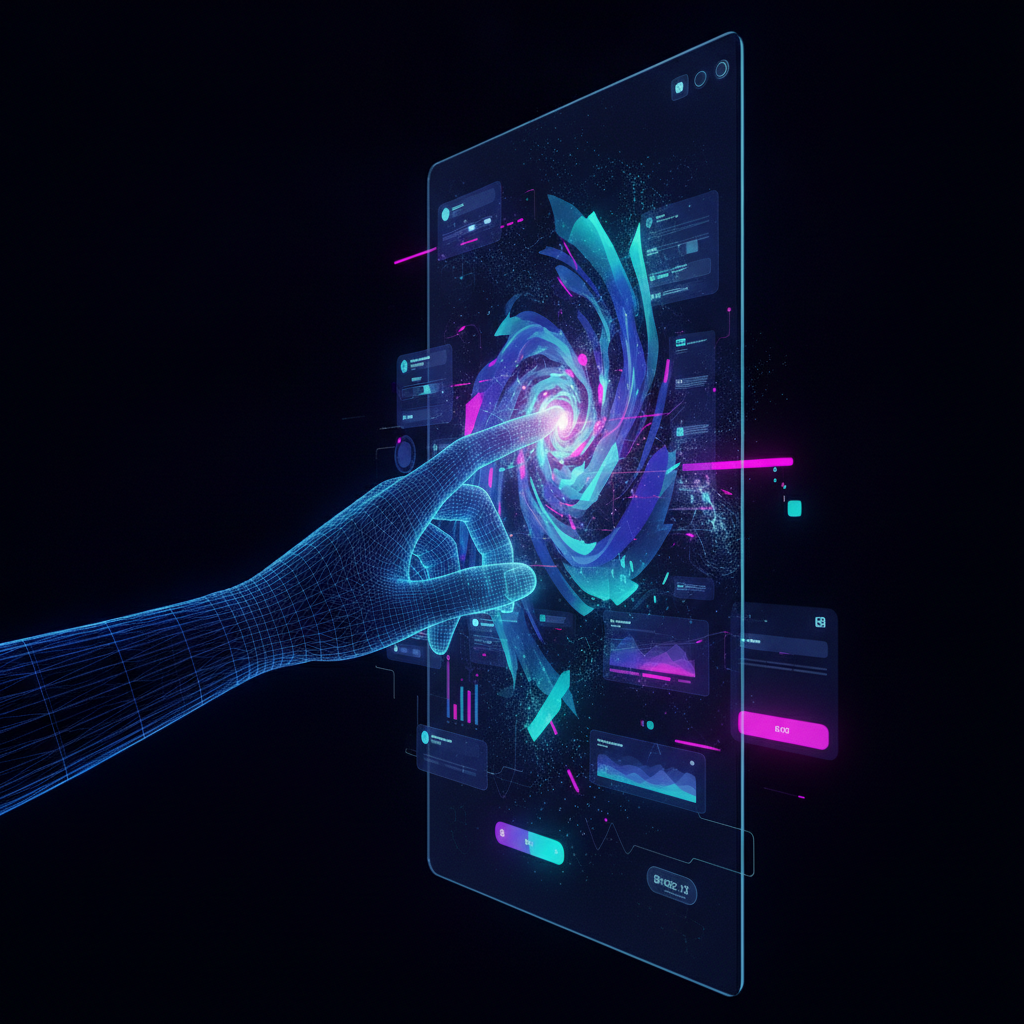
Generative UI (GenUI) is an advanced application of artificial intelligence where the user interface of a software application is created and adapted dynamically by an AI model in real-time. Unlike traditional AI-assisted design tools that merely suggest elements or automate simple tasks, Generative UI builds the interface on the fly, tailoring it to the specific user's context, behavior, and immediate needs. The industry is rapidly moving from AI as a design assistant to AI as a co-creator, where dynamic and contextual interfaces are the new standard for user engagement.
Think of it as the difference between a static blueprint and a living, breathing building that reconfigures its rooms based on who just walked in. For a new user, the app might present a simplified, guided onboarding experience. For a power user, it might surface advanced features and complex data visualizations. For someone browsing on a busy train, it might prioritize large, tappable buttons and concise information. This all happens automatically, without developers needing to code every possible state.

The rise of Generative UI isn't just an incremental improvement; it's a disruptive force that is fundamentally changing how digital products are conceived, built, and experienced. By integrating AI at the core of the interface layer, development teams are unlocking unprecedented levels of efficiency, personalization, and user-centricity.
The holy grail of UX has always been creating a one-to-one experience. Generative UI makes this a reality. By analyzing vast amounts of user data—past behavior, current location, time of day, device type, and stated preferences—GenUI can tailor not just the content but the entire app layout and visual style. A retail app could reorder its navigation to highlight categories a user frequently browses, while a productivity app could reconfigure its dashboard to match a user's specific workflow. This level of personalization, previously unachievable at scale, leads to higher engagement, better retention, and a user experience that feels uniquely crafted for the individual.
In 2026, generative AI is no longer a novelty but a standard collaborator in the design process. It excels at automating the routine, time-consuming tasks that often bog down creative teams. This includes generating consistent color palettes based on brand guidelines, creating multiple page structures for A/B testing, and producing countless variations of components like buttons, cards, and forms. This automation frees human designers from tedious production work, allowing them to dedicate their expertise to higher-value activities like user journey mapping, strategic problem-solving, and creative innovation.
The traditional design process involves a slow, linear path from sketch to wireframe to mockup to prototype. Generative UI shatters this model. AI tools can now instantly produce a wide array of interface components and complete design mockups from a simple text prompt or a basic wireframe. This capability allows development teams to test ideas, validate concepts with users, and iterate on designs at a speed that was once unimaginable. The feedback loop is shortened from weeks to days, or even hours, enabling a more agile and responsive development cycle.

Accessibility is a critical aspect of inclusive design, but it's often treated as a final checklist item rather than an integral part of the process. Development teams are now leveraging generative AI to change this. AI models can be trained on Web Content Accessibility Guidelines (WCAG) to ensure that every component they generate—from color contrasts to ARIA labels—is compliant from the start. This proactive approach embeds accessibility into the entire design workflow, reducing the risk of costly retrofitting and ensuring products are usable by everyone.
Understanding user behavior is the foundation of great design. AI is being deployed to supercharge this process. Generative models can analyze user feedback, survey responses, and session recordings to identify subtle behavioral patterns and usability insights that might be missed by human analysts. It can synthesize qualitative data from thousands of users to pinpoint common pain points or highlight features that generate the most delight, providing designers with actionable, data-driven intelligence.
While the benefits are profound, a significant risk of over-reliance on generative AI is the trend toward generic design. AI models are trained on vast datasets of existing designs, which can cause them to favor common patterns and produce interfaces that are functional but lack originality and brand identity. If every app uses the same AI models, we risk creating a digital world where everything looks and feels the same. The strategic challenge for businesses is to use GenUI as a tool to enhance, not replace, human creativity. The most successful products will be those that blend AI-driven efficiency with a strong, unique design vision that resonates with users on an emotional level and feels anything but 'hollow'.
Generative UI is not replacing designers; it's elevating them. As AI takes over routine and repetitive tasks, the role of the UI/UX designer evolves from a hands-on creator of pixels to a strategic director of the user experience. The designer of the future will be responsible for setting the vision, training the AI models, curating the generated outputs, and ensuring the final product aligns with both user needs and business goals. They become orchestrators, guiding the AI to create experiences that are not only functional and personalized but also creative, brand-aligned, and deeply human.
Generative UI represents a monumental leap forward in how we create digital experiences. It promises a future of hyper-personalized, context-aware applications that are built faster and more efficiently than ever before. For businesses and development teams, the time to prepare is now. By understanding both the immense potential and the inherent risks, strategists can harness the power of GenUI to not just automate workflows, but to build truly transformative products that define the next era of app development.
AI-assisted design tools help designers by automating specific tasks or providing suggestions within a traditional workflow (e.g., suggesting a color palette). Generative UI goes a step further by autonomously creating and adapting the entire user interface in real-time based on user data and context, acting as a co-creator of the experience.
No, Generative UI is not expected to replace human designers. Instead, it is transforming their role. Designers will shift from manual production tasks to more strategic responsibilities, such as setting the design vision, training the AI models, curating the output, and ensuring the final user experience is creative and brand-aligned.
The primary risk is producing generic, unoriginal designs that lack a unique brand identity. Because AI models learn from existing data, they can default to common patterns, leading to interfaces that feel 'hollow' or indistinguishable from competitors if not guided by strong human creative direction.