


logo
  • Home
  • Blog
  • Service
  • Dev Tools
  • FREE AI
Get A Quote
Call Us
+91 8910642626

Cookies Consent

This website use cookies to help you have a superior and more relevant browsing experience on the website. Read more...

logo
  • +91 8910642626
  • innovalogicdev@gmail.com
shape
shape
shape

Blog Details

Home Blog Details
image
  • By Sanjay Dey
  • 18 Aug, 2026
  • App Development

Why Kotlin Multiplatform is the Enterprise-Ready Framework You Need in 2026

By 2026, Kotlin Multiplatform (KMP) has matured from an experimental tool into an enterprise-grade solution for app development. This article explores why its native performance, code-sharing efficiency, and adoption by major companies like Netflix and Google make it the ideal choice for your next large-scale project.

Why Kotlin Multiplatform is the Enterprise-Ready Framework Your Business Needs in 2026

In the fast-evolving world of software development, the quest for efficiency without sacrificing quality is relentless. For years, enterprises have navigated the trade-offs of cross-platform development, often balancing speed against native performance. But as we look at the landscape in 2026, a clear frontrunner has emerged for businesses that demand the best of both worlds: Kotlin Multiplatform (KMP).

The growth has been nothing short of explosive. Adoption of KMP among cross-platform developers has skyrocketed from just 7% in 2024 to over 23% by 2026, a remarkable threefold increase in only 18 months (PerfectionGeeks Technologies). This isn't just a fleeting trend; it's a fundamental shift driven by maturity, powerful backing, and proven results in some of the world's biggest companies.

Key Takeaways

  • Enterprise-Ready Maturity: By 2026, KMP is no longer experimental. With stable tooling, official Google recommendations, and strong library support, it's a reliable choice for mission-critical applications.
  • No Performance Tax: Unlike frameworks relying on a JavaScript bridge, KMP compiles directly to native code (JVM for Android, native machine code for iOS), ensuring your app runs with true native speed and responsiveness.
  • Proven at Scale: Industry giants like Netflix, Google Workspace, McDonald's, and Cash App are successfully using Kotlin Multiplatform in production, demonstrating its capability to handle complex, large-scale enterprise needs.
  • Flexible Implementation: KMP allows you to share only the code you want, from business logic and networking to a full UI with Compose Multiplatform, while still writing platform-specific code where needed.
  • Enforces Consistency: It's ideal for logic-heavy apps, ensuring that critical rules around data, security, and financial calculations are identical across platforms, drastically reducing bugs and risks.

What is Kotlin Multiplatform (KMP)?

Kotlin Multiplatform (KMP) is an open-source technology developed by JetBrains that allows developers to share code and business logic across different platforms while retaining the benefits of native programming. Instead of writing the same application logic multiple times for Android, iOS, web, and desktop, you can write it once in a common Kotlin module. This shared code is then compiled into platform-specific components that integrate seamlessly with native UIs and platform-specific APIs.

The core idea isn't to replace native development entirely, but to streamline it. You share what makes sense—like networking, data validation, and analytics—and build the user interface with the best tools for each platform, such as Jetpack Compose for Android and SwiftUI for iOS.

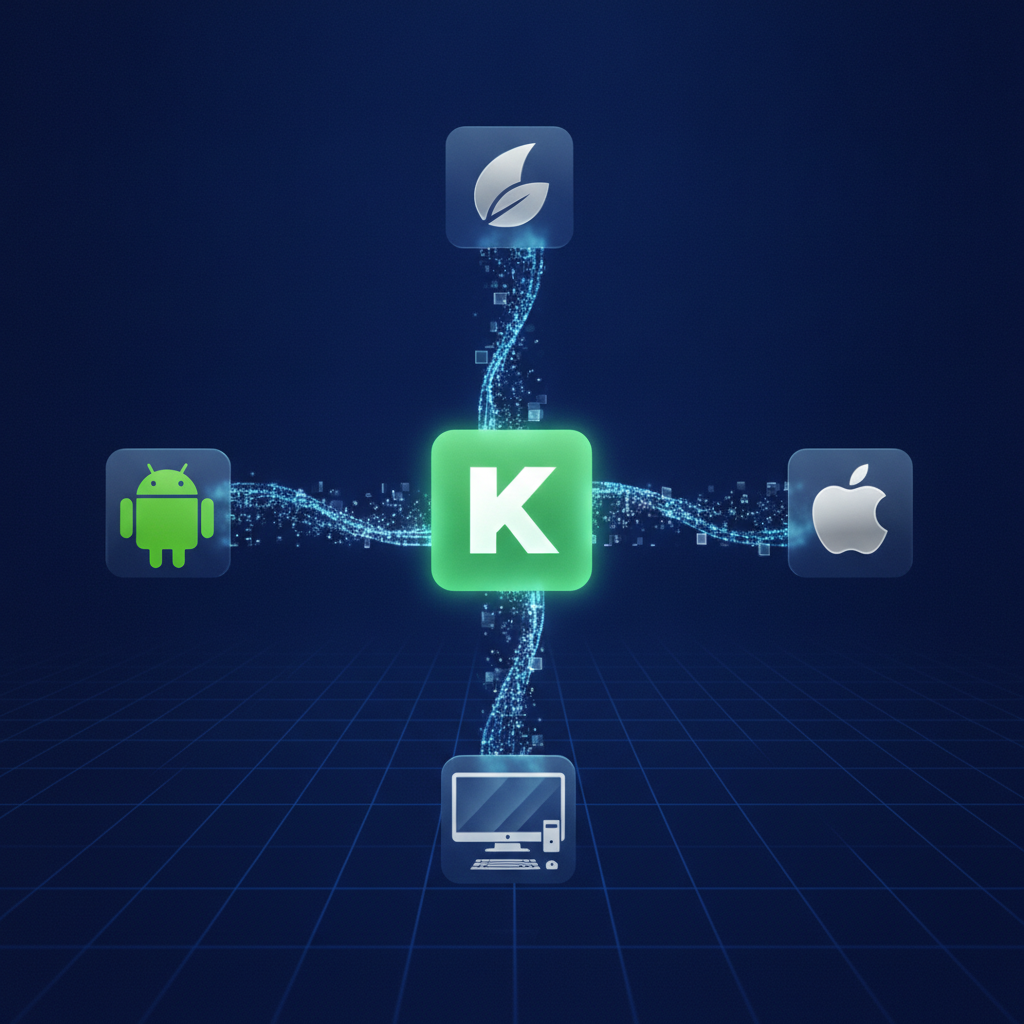
Diagram showing how Kotlin Multiplatform shares business logic across Android, iOS, and Web platforms.

The Rise of KMP: From Experiment to Enterprise Standard

For a technology to be considered enterprise-ready, it needs to prove its stability, performance, and long-term viability. By 2026, KMP has checked all these boxes. Its journey from a promising but experimental project to a mainstream solution is marked by key milestones. The most significant endorsement comes from Google, which now officially recommends KMP for sharing business logic between Android and iOS applications.

This maturity is reflected in the ecosystem. The 2026 landscape shows stable tooling that makes development smoother and more predictable. Crucially, iOS interoperability has seen massive improvements with features like Swift Export, which simplifies the process of using shared Kotlin code from Swift. This addresses one of the historical friction points and makes KMP a more attractive option for teams with deep iOS expertise. The robust library support means developers aren't starting from scratch; they have access to a rich ecosystem of tools for everything from networking to data persistence.

Why Choose Kotlin Multiplatform for Enterprise Applications?

While the growth statistics are impressive, the technical and business advantages are what truly make KMP a compelling choice for enterprises. It directly solves some of the most persistent challenges in multi-platform development.

Uncompromised Native Performance

How does Kotlin Multiplatform work without slowing down the app? It achieves this by compiling directly to native code, completely sidestepping the performance tax associated with other cross-platform frameworks. There is no JavaScript bridge or interpreter acting as a middleman. For Android, the shared code compiles to JVM bytecode. For iOS, it compiles to native machine code. This means your application logic runs as fast as if it were written in the native language, providing the smooth, responsive user experience that consumers and enterprise users expect.

Enforce Business Logic Consistency

For enterprise applications, consistency is not just a feature—it's a requirement. This is especially true for logic-heavy apps dealing with complex data transformations, real-time syncing, or intricate financial rules. When this logic is implemented separately for each platform, the risk of subtle bugs, security vulnerabilities, and inconsistent behavior skyrockets. KMP eliminates this risk by creating a single source of truth. The core business logic is written, tested, and maintained in one place, guaranteeing that calculations and rules are executed identically on both Android and iOS.

Flexible Adoption Strategy

Adopting a new technology can be a daunting prospect for large organizations. KMP shines here due to its incredible flexibility. You don't need to rewrite your entire application. Teams can start small, perhaps by sharing the networking layer or a specific business feature in a new module. The 2026 ecosystem fully supports a hybrid approach where companies share non-UI logic while continuing to build beautiful, platform-specific UIs with the tools they already love: Jetpack Compose for Android and SwiftUI for iOS. This allows for incremental adoption that minimizes risk and maximizes ROI.

Abstract visualization of native code performance, representing the speed and efficiency of Kotlin Multiplatform.

The Best of Both Worlds: Shared UI with Compose Multiplatform

While KMP's primary strength has been sharing business logic, the ecosystem has continued to evolve. A major development is the increased stability of Compose Multiplatform for iOS. This framework, built on top of KMP, now allows development teams to share UI code in addition to business logic. For applications where a consistent brand look and feel across platforms is a top priority, Compose Multiplatform offers a path to build the entire application from a single, shared codebase, further accelerating development and reducing maintenance overhead.

Real-World Adoption: Who is Using KMP?

The ultimate proof of a technology's enterprise-readiness is its adoption by major industry players. Kotlin Multiplatform is not just a theoretical success; it's being used in production at a massive scale. Companies like Netflix use it to streamline their product engineering. The Google Workspace team leverages it for apps that need to run seamlessly across platforms. Even global brands like McDonald's and fintech leaders like Cash App rely on KMP to power their mobile applications. This widespread adoption provides a clear signal that KMP is a battle-tested and reliable solution for building high-stakes, consumer-facing products.

Is KMP the Right Fit for Your 2026 Project?

Kotlin Multiplatform offers a powerful value proposition, but it's most effective in specific contexts. It is an ideal fit if your organization:

  • Has a logic-heavy application where consistency is critical.
  • Already has a team with Kotlin or Android development experience.
  • Prioritizes native performance and a responsive user experience.
  • Wants to reduce code duplication and maintenance costs without compromising on quality.

As the digital landscape becomes more competitive, the ability to ship high-quality applications efficiently across multiple platforms is a significant advantage. Kotlin Multiplatform has matured into a powerful, flexible, and performant framework that empowers enterprises to do just that.

Frequently Asked Questions (FAQ)

What is Kotlin Multiplatform (KMP)?

Kotlin Multiplatform is a technology from JetBrains that enables developers to share code, such as business logic and data layers, between different platforms like Android and iOS. It compiles to platform-native code, allowing you to reuse logic while building native user interfaces for each platform.

Is Kotlin Multiplatform ready for enterprise use?

Absolutely. By 2026, KMP is considered a mature and enterprise-ready technology. It is officially recommended by Google for sharing logic, features stable tooling and strong library support, and is used in production by large-scale companies like Netflix, Google Workspace, and McDonald's.

How does KMP performance compare to other cross-platform frameworks?

KMP offers superior, native-level performance. Unlike frameworks that use a JavaScript bridge or an interpreter, KMP compiles directly to platform-specific formats (JVM bytecode for Android, native machine code for iOS). This eliminates common performance bottlenecks and ensures the app runs as smoothly as a fully native application.

Can I share UI code with Kotlin Multiplatform?

Yes. While KMP's traditional strength is sharing non-UI logic (like networking and business rules), the recent stability of Compose Multiplatform for iOS now makes it possible to share UI code as well. This allows teams to build a complete application from a single, shared codebase if desired.


Tags: Kotlin Multiplatform KMP App Development
Share:
Search
Category
  • Web Development (9)
  • IT Consultancy (10)
  • App Development (31)
  • UI/UX Design (3)
  • Digital Marketing (9)
  • Gaming Development (21)
Resent Post
  • image
    17 Aug, 2026
    Social Casino Development: A Developer's Guide for 2026
  • image
    16 Aug, 2026
    A Developer's Guide to the Google Ads September 2026 Gambling Policy Updates
  • image
    14 Aug, 2026
    Navigating the Google July 2026 Update: A Complete Website Audit Guide
Tags
social casino development sweepstakes casino gaming development mobile gaming iGaming Google Ads Gambling Policy Game Development Ad Compliance Real-Money Gaming Social Casino Games SEO Google Update Helpful Content Content Audit Digital Marketing Technical SEO Apple Vision Pro visionOS Enterprise App Development Spatial Computing Augmented Reality VR Training AR Gaming Real Money Gaming Gambling Technology Player Engagement generative AI game development asset creation AI in gaming cost reduction game design real-money gaming payment processing fintech compliance fraud detection Gaming Development Online Gaming Act India Gaming Law Esports Regulation Game Developer Guide Flutter App Development Mobile Development Flutter 3.44 Cross-Platform Developer Tools iOS 18 SwiftUI Xcode App Monetization Mobile AI FedNow Instant Payments Fintech Payment Processing AI in Gaming Personalization Responsible Gaming Enterprise Software AI Overviews Google SGE Generative Engine Optimization game monetization mobile game development in-app purchases game economy player retention AI in fantasy sports Fantasy Sports App Sports Tech Machine Learning Angular Angular 18.1 Web Development TypeScript @let syntax Frontend Development Ad Policy Social Casino Android 15 Mobile App Development Android Developers Privacy Features Enterprise Mobility Gaming Policy Advertising Compliance Regulatory Compliance GameTech International Law Sweepstakes Casino Gaming Law Compliance machine learning player lifetime value Google Mobile Ads Next-Gen SDK Android Development Kotlin Mobile Advertising Google Play Policy App Compliance Android Vitals Stripe Payment Gateway Monetization Stripe Connect Game Payments Google Play Mobile App Monetization App Distribution Epic Games Lawsuit Swift 6 iOS Development Concurrency Data Race Safety Swift Migration responsible gaming player protection gaming compliance gambling technology Mobile Games GameDev In-App Purchases RMG India Gaming Mobile Gaming Chargeback Policy Review Refund API AI in software development SDLC Artificial Intelligence Future of Coding IT Consultancy AI-powered testing Spam Update Search Engine Optimization Project IDX AI in Development Cloud IDE Firebase Full-Stack Development Native Development Tech Stack 2026 Google Consent Mode v2 Data Privacy GDPR Marketing Analytics third-party cookie update digital marketing first-party data marketing strategy Google Chrome data privacy Policy Updates AI in Marketing Digital Marketing Trends Marketing Automation Predictive Analytics MarTech Game Compliance Regulatory Landscape Legal Tech Skill-Based Games eSports Game Monetization SDK Apple Xcode 16 App Store social casino game compliance monetization visionOS 2 mobile app development app trends 2026 flutter augmented reality AI in apps 5G cross-platform development Apple Intelligence App Intents Siri AI Apps Generative AI UI/UX Design User Experience Design Trends Ambient AI Online Gaming online gaming igaming casino software Google AI Overviews Content Strategy Structured Data zero-click searches Google Business Technology App Security poastman image converter website to android app free tools AI Tools unity free assests unity egf unity tutorial elvish yadav systum unity game ben 10 free unity assests photon rng tseting fantasy how to make fantasy app like dream11 fantasy cricket fantasy cricket sports fantasy cricket app best payment gateway in india accept payments online payment gateway best payment gateways in india payment gateway for ludo game payment gateway for rummy game payment gateway for gaming apps how to send bulk sms without dlt registration send otp without dlt how to send otp without dlt how to send otp without dlt otp how to integrate otp in website transactional sms transactional bulk sms transactional sms india transactional sms gateway india transactional sms service dlt registration in india figma tutorial for beginners figma design figma tutorial ui design figma ux design design design for figma web design ui/ux design facebook ads how to run facebook ads facebook advertising facebook marketing how to make a racing game in unity racing unity 3d unity tutorials gaming games racing game racing games unity games unity game engine unity multiplayer tutorial networking unity3d unity game development indian gamer making indie games unreal engine RNG online money games in india how to earn money online online betting laws in india online gaming license india make money online is betting legal in india india earning money unity source codes unity source code multiplayer multiplayergames dream11 ludo snake & ladder real money
shape
shape
shape
shape
shodow
image

UDYAM-WB-16-0027302

Our Services

  • IT Consultancy
  • App Development
  • UI/UX Design

Quick Link

  • Blog
  • About
  • Contact
  • FAQ
  • Home
  • Refund Policy

Contact Us

45, South Buxarah Road

  • Opening Hours:

    Mon - Sat: 10.00 AM - 4.00 PM

  • Phone Call:

    +91 8910642626, +308-5555-0113

© Copyright@ 2024 Innovalogic

  • Terms & Conditions
  • Privacy Policy